
What is the AIDA Model?
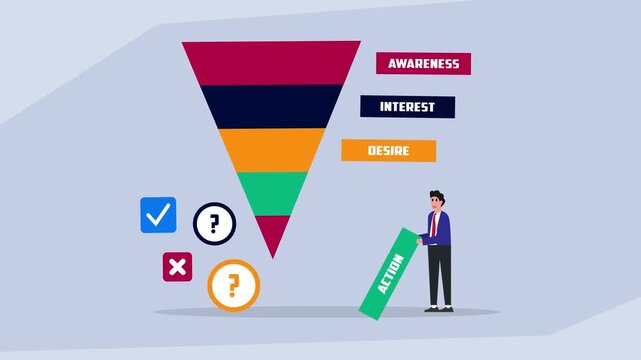
The AIDA model is a classic marketing and sales framework that outlines the steps a customer moves through when interacting with a brand or product. It helps marketers attract potential buyers, keep them engaged, and guide them toward making a final purchase decision.
Each stage represents a psychological shift in the customer’s mindset—from noticing a brand for the first time to actively wanting the product and finally taking action.
AIDA stands for:
- Attention – Making the customer aware of your product.
- Interest – Getting them curious and engaged.
- Desire – Making them want what you offer.
- Action – Encouraging them to buy or take the next step.
AIDA Funnel Stages
Attention – Capture Awareness
The Attention stage is where customers first notice your brand or product. Here, the goal is simply to get seen.
When to use:
- Launching a new product
- Running brand-awareness campaigns
- Reaching new audiences
How to use:
- Use bold visuals and strong headlines
- Use social media ads or viral content to reach many people
- Use eye-catching storytelling or surprising facts
Examples:
- A dramatic before-and-after image
- A viral TikTok or Instagram reel
- A surprising statistic that grabs attention
Interest – Build Connection
Once you capture attention, the next goal is to get the customer genuinely interested by offering helpful information.
When to use:
- Visitors come to your website but don’t buy
- People follow you but don’t interact
- Customers clicked your ad but are unsure
How to use:
- Share product details, guides, and tutorials
- Highlight benefits, not just features
- Use relatable stories or examples
Examples:
- A YouTube demo video
- A blog explaining how your product solves a problem
- Behind-the-scenes product photos
Desire – Make Them Want It
At this stage, customers already know about your product. Now your job is to build emotional motivation and make them WANT it.
When to use:
- Customers compare your product with others
- People add products to cart but don’t finish buying
- Leads sign up but don’t convert
How to use:
- Show testimonials, reviews, success stories
- Explain what makes your product unique
- Use emotional storytelling
- Show product demos and real-life results
Examples:
- Customer review videos
- Case studies
- Comparison charts showing why your brand is better
Action – Guide the Next Step
The Action stage is where you push the customer to make a purchase or complete another important conversion goal.
When to use:
- You want to increase sales or sign-ups
- You want to simplify the customer journey
- You need a clear final step for leads
How to use:
- Use clear call-to-action (CTA) buttons
- Make checkout processes simple
- Offer discounts or bonuses
- Use urgency (limited time/limited stock)
Examples:
- “Buy Now” button
- Countdown timer for a discount
- Free trial or free consultation signup
Why the AIDA Model Works
The AIDA model works because it follows the natural psychological process of how humans make decisions:
- First, we notice something new.
- Then we get curious.
- Then we decide if we want it emotionally.
- Finally, we take action.
This predictable pattern helps marketers design campaigns that connect with customers at the right moment in their buyers’ journey.
Where the AIDA Model Is Used
AIDA applies to almost every type of marketing, including:
- Social media campaigns
- Email marketing
- Sales pages and landing pages
- YouTube and video ads
- Cold outreach and sales calls
- E-commerce product descriptions
- Brand storytelling and promotions
Real-Life Examples of AIDA in Marketing
- Apple uses elegant visuals for Attention, clean product pages for Interest, lifestyle storytelling for Desire, and stores/website for Action.
- Coca-Cola uses emotional ads for Desire and simple CTAs like “Share a Coke” for Action.
- Nike uses inspiring stories (Desire) and bold CTAs like “Just Do It” (Action).